
• Home
    • THE TEAM
  • ECONOMIC RESEARCH
    • ARTICLES
  • APPLIED PORTFOLIOS
  • Contact
  • WEBINARS
  • VIDEOS
    • Exchange Rates
    • Australian Housing
    • Inflation 2022
    • Liquidity & Asset Prices
    • Forecasting PMIs
    • Business Cycle Asset Allocation
Picture
IMPORTANT NOTICE

This website is intended for wholesale and institutional clients only. Neither the company nor this website offers investment advice, either general or specific. No reliance should be placed on, nor action taken in relation to any information or data contained herein. By continuing to view this website you are agreeing that you will take no investment-related action, and that no liability shall rest with AAS Economics, in relation to this website or its contents.

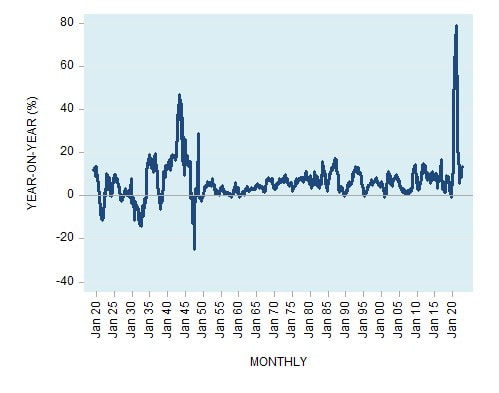
The Iran conflict has not altered the basic monetary and liquidity drivers of the economy and markets. Current growth and inflation trends were set in motion over a year ago.

"We are the intersection of economic forecasting and portfolio construction."

" AASE's framework regularly forces us to challenge our assumptions. They are an indispensable antidote to Groupthink. "

US Global Asset Manager
" Their ability to link money supply and liquidity to the markets - and then apply this to concrete portfolio construction - is unique. Few have been able to operationalize economic theory like this on such a consistent basis. "

​Global Equities Fund Manager
" The clarity of AASE's logic and the discipline with which they apply it make them an essential ingredient in our decision-making."

​Australian Superannuation Fund Manager 
" Your yield curve predictions have been critical for our positioning. Thank you. "

Global Fixed Income Manager
" In planning the expansion or contraction of our loan portfolio we need accurate forecasts of the economic cycle and loan delinquencies. We turn to AASE every time."

​US Consumer Lending Company


Sound analysis delivers sound results...

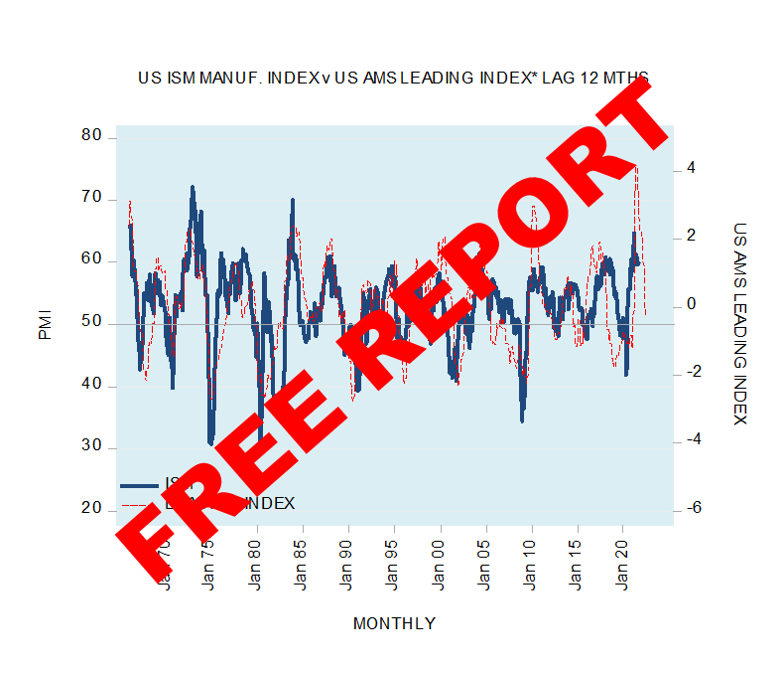
  • Our monetary analysis predicted a sharp decline in the US PMIs a year before the COVID lockdowns, together with the 2021-23 retreat and the subsequent (and ongoing) slow recovery.
  • We called the 2022-23 bond market selloff well in advance and warned that a sustained recovery was unlikely, all based on monetary factors.
  • When the world was hand-wringing over the dire post-Ukraine outlook for the German economy we successfully called the current slow recovery - a year ahead of time. 
  • While the consensus was still expecting Fed rate cuts in late 2025 and through 2026 we were predicting no cuts and the likelihood of rising inflation and Fed tightenings this year (2026).
  • We successfully called the timing of the Reserve Bank of Australia's recent change of policy direction - nearly a year beforehand - based on monetary trends in Australia and its trading partners.
  • We called both the flattening and then steepening of the US, UK and German yield curves in the post-COVID period.
  • We predicted six months in advance the narrowing of high yield spreads in the US, Europe, the UK and Australia from early 2024.  
  • We demonstrated the fallacy of the standard claim that inverted yield curves are always followed by recession and showed what really drives the economic cycle.
  • We predicted the steep rise in oil prices six months before the Iran war - all based on monetary dynamics.
  • Our gold model exited long positions at the end of January, 2026.
  • Our country liquidity ranking model showed how to prioritise country stock allocations based on relative monetary liquidity.

Welcome to the combined power of logical, informed and accurate economic forecasting and disciplined portfolio construction based on hands-on investment management experience. 

Applied economics from
experienced investors


We take the best of classical economic theory and then combine this with rigorous statistical analysis and decades of real-world market trading and funds management experience.

This allows us to develop and apply forecasting tools for our institutional clients that generate reliable forward trends for the world's economies and markets and to look at economics as an investment tool rather than an academic discipline.
Bridging the gap from economics to portfolio construction

​We use our predictive techniques to not only forecast the economic cycle and its major variables but then position portfolios to take advantage of the various stages of the cycle that lie immediately ahead.

In practice this manifests as concrete portfolio construction rules covering multiple assets in multiple countries. We have model portfolios that demonstrate the effectiveness of the approach in both absolute and risk-adjusted terms.

We operationalise our economic analysis and provide these insights to clients. We are not theoreticians - our work is designed to improve portfolio performance and our model portfolios transparently and regularly put our ideas to the test.

Learn more here.

The indispensability of money and liquidity in economic forecasting and portfolio construction

Our philosophy is simple. We begin with fundamental, logical assumptions grounded in classical economics and proceed from these assumptions to describe and forecast the complexity of the economy and the markets.

Whether it's economic growth, inflation, stock market returns, yield curves, commodity prices or exchange rates our unique money and liquidity methodology has shown durable predictive accuracy which we have been able, for over a decade, to translate into superior model portfolio results. 

We use a set of proprietary money and liquidity leading indicators to forecast economies and markets -  sometimes years ahead - and then manifest this approach in a variety of rules-based systematic portfolios.


Welcome

Here you will find access to applied economic research that is at once unique and challenging.

Through our redefinition of money supply and liquidity – informed by readings in classical economics – and our advanced quantitative modelling we are able to produce iconoclastic macroeconomic forecasts and to translate these forecasts into actionable notional portfolios across multiple countries and multiple assets.

As you will see from the profiles of our Team members, our skillset is both broad and deep, ranging from academia to government to financial market advisory to hedge fund management and beyond.

Our clients see us as providing a radical counterpoint to traditional forms of economic and market analysis which enable us to develop and deploy tools for active funds management. We apply consistent themes - based on core principles - to economies and markets even where these economies and markets appear to differ markedly, either geographically or temporally.


Our Philosophy​

Our approach to economic and asset market analysis is simple yet effective.

It is our view – and our observation over many decades – that what we know as the business cycle is predictable. Once the cycle is predicted then the performance of asset classes and individual assets can be better forecast.

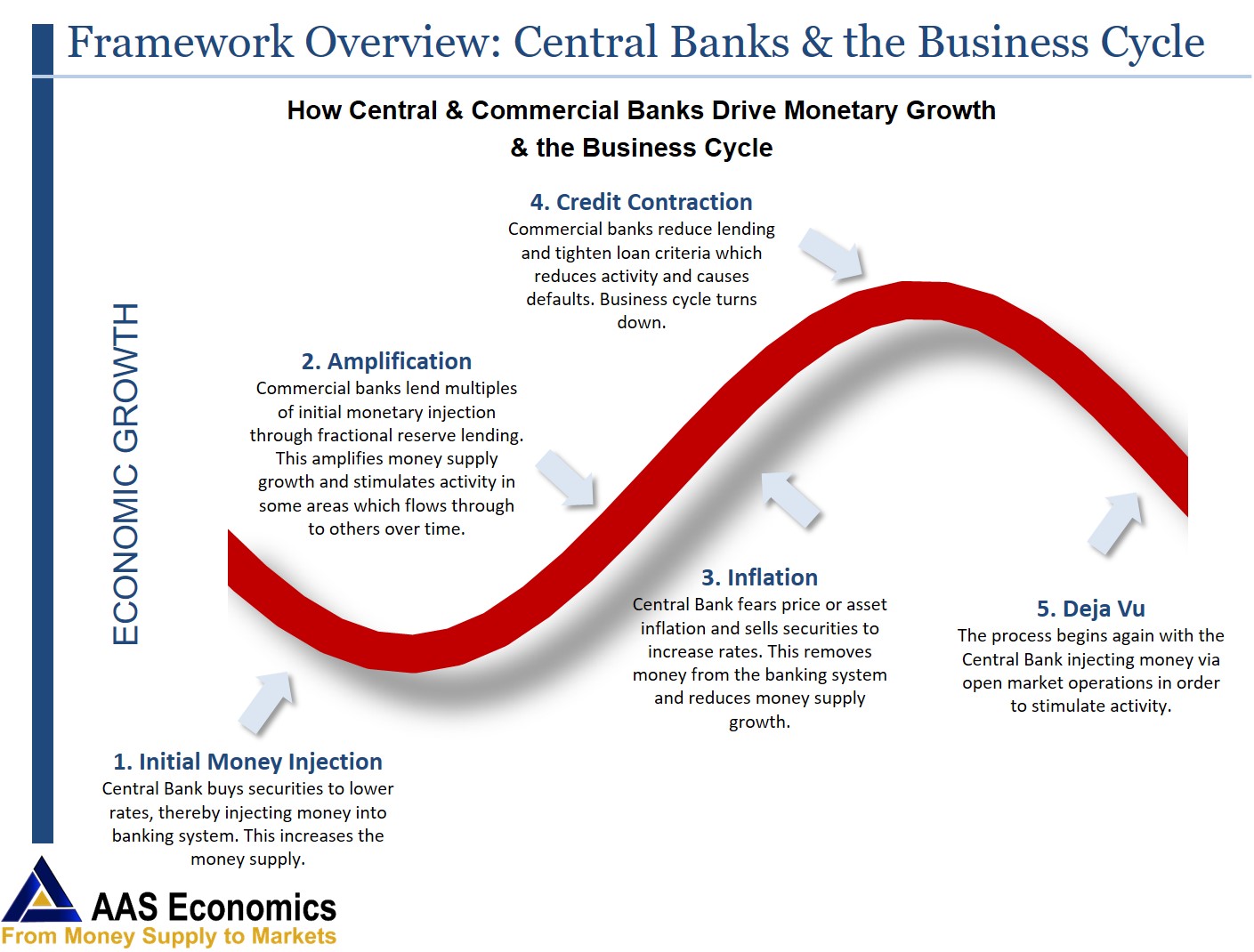
The cycle is primarily caused by monetary, credit and liquidity phenomena. Expansion and contraction of these aggregates (including through interest rate policy) initiated by the central banks and amplified through credit creation by the commercial banks, lead to predictable outcomes.

Firstly, the actions of the central banks affect the signals received by economic agents in their day-to-day activities. This may manifest in changes in expectations, changes in their time preferences, or other factors.

Secondly, money created by the central and commercial banks ripples out unevenly into the economy - the "Cantillon Effect" - as some businesses and sectors receive it earlier than others and expand their activity. These early leaders can drag other sectors with them but can also create cost pressures for those sectors not enjoying the largesse, as those other sectors are forced to compete for resources while not seeing a proportionate increase in demand.

This process then results in re-allocated resources throughout the economy while at the same time giving the appearance of generalised economic growth, as more money is deposited with banks who further amplify the cycle through additional fractional reserve lending.

The  newly created credit finds its way not only into product markets but also into asset markets, leading to increases in asset prices - both sectorally and more generally.

Herewith, the boom.

However, as the contradictions created by this credit and liquidity expansion become manifest – for example via prices rising first in some areas and then spreading more widely – the central banks decide that enough is enough and the brakes are applied. Those who have been late to the credit party feel the damage first, as the growth forecasts that formed the basis of their borrowings fail to materialise, their profits decline or turn to losses and their bankers get cold feet.  

Now the process goes into reverse. The banks first begin to restrict lending (or demand repayment or increased collateral) in the sectors highly populated by latecomers and then, when other related sectors begin to decline, this credit contraction becomes widespread.

The mistakes of misallocated capital return to haunt lenders and borrowers alike, with both economic activity and asset prices declining.

Herewith, the downturn.

Sadly, the state may step in to aggravate the process through bailouts of industries deemed  "too big to fail".

And all the while different sectors and different assets are responding in different ways to these changes in credit conditions driven by central and commercial banks.

Eventually, of course, the wheel turns again and the central banks decide that stimulus is required (and often the state more broadly intervenes along similar lines using fiscal and bailout policies). The entire cyclical process, along with its inevitable misallocations of resources, is then re-commenced.

Vertical Divider
The Application​

Our methodology for analysing these leading trends in money, credit and liquidity creation lends itself both to quantitative modelling and to historical testing.

Our first step in modelling each economy and market is the calculation of our key leading indicator, which we call Adjusted Money Supply or "AMS". AMS is a redefinition of money, credit and liquidity using principles derived from classical economics.


We also define and calculate a second variable - liquidity - which is the difference between the supply of money and the demand for money. Liquidity is, in fact, surplus or excess money and it typically finds a home in asset markets.

Given the leads that changes in money supply and liquidity provide when predicting the business cycle, it is also possible to forecast the health of various sectors of the economy as the cycle moves through its various stages. Thus it is possible to use our money-driven approach to predict which business sectors are likely to flourish, and which to decline, as the cycle unfolds. For investors this gives valuable, forward-looking sector insights which can assist in stock selection and asset allocation.

Further, it is possible to derive asset allocations across multiple classes such as equities, bonds and commodities.

This portfolio construction can be done on an entirely systematic basis by applying economic logic to historical returns data.

All of these are discussed further in our Research area.

Please do not hesitate to contact us to discuss our work in greater detail.


Vertical Divider
Proudly powered by Weebly
  • Home
    • THE TEAM
  • ECONOMIC RESEARCH
    • ARTICLES
  • APPLIED PORTFOLIOS
  • Contact
  • WEBINARS
  • VIDEOS
    • Exchange Rates
    • Australian Housing
    • Inflation 2022
    • Liquidity & Asset Prices
    • Forecasting PMIs
    • Business Cycle Asset Allocation